
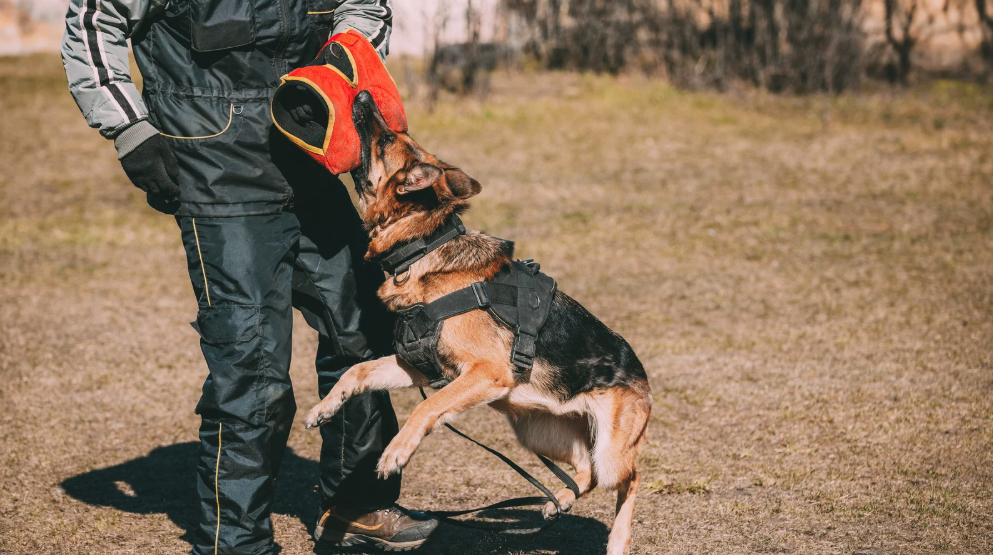
Achieving excellence in advanced protection dog training requires a deep understanding of what motivates a canine. It’s not about aggression, but about channeling a dog’s natural instincts and drives into a focused, controlled skill set. Professional trainers work to build upon these inherent qualities, shaping them through positive reinforcement and consistent practice. The goal is to develop a confident, stable, and reliable partner. Understanding the core drives that power a dog’s performance is the first step in this sophisticated training process.
The Foundation of Drive in Canine Training
Every dog possesses a unique combination of innate drives. These are instinctual urges that have been shaped by centuries of breeding for specific tasks. In the context of protection work, trainers are primarily interested in harnessing a select few of these drives to build a reliable and effective canine partner.
Prey Drive
Prey drive is the dog’s natural instinct to chase, catch, and carry. In training, this drive is stimulated using equipment like bite sleeves and tugs, which the dog perceives as prey. A strong prey drive is essential because it makes the training process enjoyable for the dog. They see the exercises as a fun game, which keeps them engaged and eager to participate. This positive association is crucial for building a happy and willing worker.
Defense Drive
Defense drive is rooted in a dog’s survival instinct—the drive to protect itself, its pack, or its territory from a perceived threat. A professional trainer carefully nurtures this drive, teaching the dog to respond to genuine threats with confidence and control, rather than fear. It’s about creating a calculated response, not a reactive one. This training also highlights the power of personal protection dogs for women, providing a reliable sense of security. The aim is to develop a dog that is discerning and only engages when a real threat is present.
Balancing Drives for Optimal Performance
The art of advanced training lies in balancing these drives. A dog that operates solely in prey drive might not take a real threat seriously, while a dog working only from defense can become stressed or reactive.
A skilled trainer knows how to move a dog between these states of mind. They use prey-based exercises to build skill, speed, and enthusiasm. Then, they introduce controlled scenarios that engage the dog’s defensive instincts, teaching it to be serious and focused when it matters most. This balance creates a stable, clear-headed dog that understands its role and can perform reliably under pressure. The result is a companion that is both a joy to be around and a formidable protector when needed.
Conclusion
Harnessing a dog’s natural instincts is a complex and nuanced endeavor. It requires expertise to cultivate a confident and stable protector that is both a capable guardian and a well-adjusted companion. The process is about communication, understanding, and channeling a dog’s inherent abilities into a focused and reliable partnership, ensuring the animal is happy, confident, and effective in its role.