
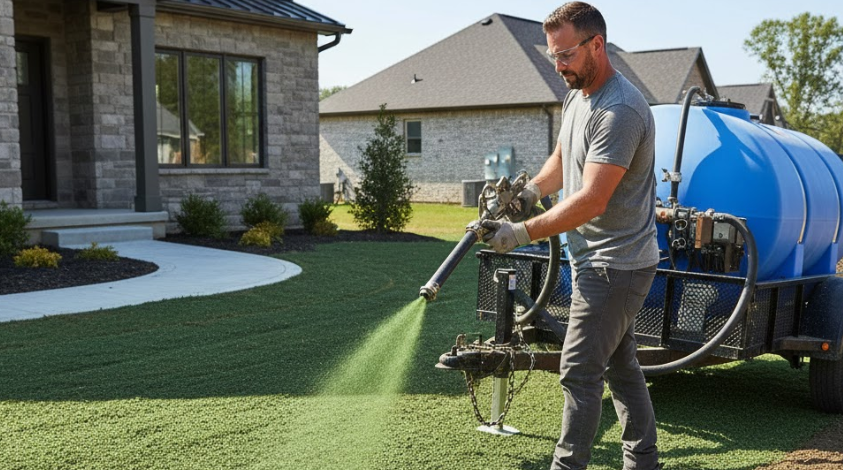
Establishing healthy turf requires more than simply spreading seed across the soil. It involves careful planning, soil preparation, and ongoing support to ensure long-term growth. This is why many property owners and developers turn to a hydroseeding company in Cleveland to achieve consistent and durable turf results. Hydroseeding combines seed, water, mulch, and nutrients into a single application that supports faster germination and stronger root development. This integrated approach makes hydroseeding a complete system rather than a single-step solution.
Hydroseeding is widely used for residential lawns, commercial landscapes, and erosion control projects. Its effectiveness comes from how each component works together to create ideal growing conditions. By understanding what makes hydroseeding a complete turf establishment system, it becomes clear why professional application delivers reliable results.
The Science Behind Hydroseeding
Hydroseeding works by applying a slurry mixture that contains grass seed, mulch fertilizer, and water. This mixture is evenly sprayed across prepared soil, creating a protective layer that supports germination. The mulch helps retain moisture while shielding seeds from wind erosion and temperature fluctuations.
Moisture retention is a critical factor in turf establishment. Hydroseeding maintains consistent moisture levels around the seed, which encourages faster sprouting. This environment supports uniform growth and reduces patchy results often seen with other methods. Nutrients included in the mixture provide early support for developing roots. As seeds germinate, they have immediate access to essential elements that promote healthy growth. This balanced combination allows turf to establish more quickly and evenly.
Soil Preparation and Surface Coverage
A complete turf system begins with proper soil preparation. Before hydroseeding is applied, the soil is graded and cleared of debris. This creates a stable surface that allows seeds to make direct contact with the soil. Hydroseeding excels at providing uniform coverage across large or uneven areas. The spray application reaches slopes and contours that are difficult to address with traditional seeding methods. This coverage helps prevent erosion while the turf establishes roots.
Even distribution is essential for consistent turf density. Hydroseeding ensures that seed and nutrients are spread evenly, which reduces the need for future repairs or overseeding. This efficiency contributes to long-term landscape performance.
Erosion Control and Root Development
One of the defining features of hydroseeding is its role in erosion control. The mulch component forms a protective layer that holds soil in place during early growth stages. This protection is especially important on slopes and exposed areas.
As turf begins to grow, roots anchor the soil further, reducing erosion risk. Strong root systems improve soil stability and support healthy turf over time. This process highlights how hydroseeding addresses both immediate and long-term landscape needs. The system supports gradual and sustained growth rather than rapid surface coverage alone. This focus on root development leads to stronger turf that can withstand environmental stress.
Adaptability Across Project Types
Hydroseeding is adaptable to a wide range of applications. It can be customized based on soil conditions, climate, and intended use. Seed blends are selected to match specific project requirements, ensuring optimal performance.
This adaptability makes hydroseeding suitable for residential lawns, commercial properties, and infrastructure projects. The ability to tailor the mixture enhances success across different environments. A professional application ensures that each element is adjusted correctly. Experience and knowledge play a key role in selecting appropriate materials and application techniques.
Long-Term Benefits of a Complete System
The integrated nature of hydroseeding provides long-term advantages. Turf established through hydroseeding tends to be more uniform and resilient. This reduces maintenance needs and improves overall appearance. By supporting healthy root systems from the start, hydroseeding promotes durability. Turf is better equipped to handle foot traffic, weather changes, and seasonal stress. The system also supports environmental goals by reducing soil erosion and promoting vegetation growth. This contributes to sustainable landscape development and site stability.
Conclusion
Hydroseeding stands out as a complete turf establishment system because it integrates seed moisture, nutrients, and protection into a single application. Its ability to support fast germination, strong root development, and erosion control makes it an effective solution for a wide range of projects. When applied by experienced professionals, hydroseeding delivers consistent, durable turf that supports long-term landscape performance.